
It takes many times more for a scar to disappear than it takes for a wound to heal. But some acne scars cannot be cured with normal medicine, and some scars are deeply connected to our emotions. Every time we look in the mirror, those marks remind us of painful breakouts, lost confidence, or even the hesitation to meet people face-to-face.
So it becomes important to fade them — not just for clearer skin, but for emotional healing as well.
Today, we’ll discuss whether a dermatologist can completely fix acne scars with professional treatments or if some scars are here to stay for a lifetime.
Understanding Acne Scars – Why Do They Happen?
When acne heals, your skin tries to repair the damage. During this process, if your body produces too little or too much collagen, it results in scars.
- Depressed (Atrophic) scars – such as ice-pick, boxcar, or rolling scars, which occur when there’s a loss of tissue.
- Raised (Hypertrophic) scars – occur when there’s an excess of collagen during healing.
While mild scars may fade with time, deep acne scars often stay permanently unless treated professionally. That’s where a dermatologist’s role becomes crucial.
Can a Dermatologist Really Fix Acne Scars?
Yes — a dermatologist can significantly reduce or even remove acne scars, depending on their type and depth. At a professional clinic, we first analyze your skin texture, scar type, and healing history, then plan a personalized treatment that works best for you. No two scars are the same, and neither are the treatments that follow.
Let’s look at some of the most effective dermatologist-recommended treatments for acne scar reduction.
Laser Resurfacing for Acne Scars
One of the most advanced and effective treatments for acne scars, laser resurfacing works by removing damaged skin layers and stimulating collagen production. It helps smooth pitted scars, improves skin texture, and gives a more even tone.
At Influennz Clinic, we use fractional CO₂ laser and Er: YAG laser, customized to your skin type for the safest and most effective results.
Microneedling with Radiofrequency (MNRF)
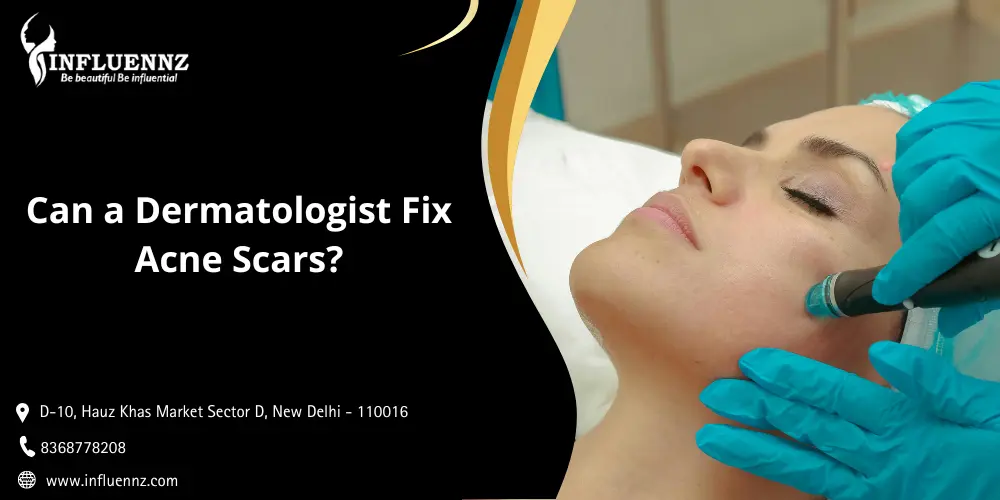
This treatment creates tiny controlled micro-injuries in the skin using fine needles combined with radiofrequency energy. It triggers collagen and elastin formation, essential for repairing depressed scars. MNRF gives visible improvement in skin firmness and scar depth within a few sessions, with minimal downtime.
Chemical Peels
Medical-grade chemical peels help in exfoliating damaged skin and promoting regeneration.
For mild scars and post-acne pigmentation, peels like TCA, glycolic acid, or salicylic acid are often recommended. They not only lighten scars but also give the skin a healthy glow.
Dermal Fillers
For deep boxcar or rolling scars, dermal fillers can be injected beneath the scar to lift it to the skin’s surface. The result is smoother, more even skin, and an instant confidence boost.
Though temporary, fillers are a quick fix for visible improvement.
PRP Therapy (Platelet-Rich Plasma)
PRP uses your own blood plasma, rich in growth factors, to heal and rejuvenate skin naturally. When combined with microneedling, PRP accelerates tissue repair and boosts collagen regeneration, making scars less visible and improving overall skin health.
Subcision
This technique is ideal for rolling scars. A dermatologist inserts a tiny needle under the scar to break the fibrotic strands, pulling the skin downward. It’s a simple, minimally invasive procedure that offers dramatic improvement when combined with lasers or PRP.
Can Acne Scars Be Completely Removed?
Here’s the truth: not all acne scars can be completely erased, but with the right combination of treatments, they can be made almost invisible.
You can achieve a smoother, brighter, and more even skin texture that restores your confidence and lets your natural beauty shine through.
The results depend on:
- Type and severity of scars
- Skin type and healing response
- Consistency in treatment and aftercare
With modern dermatological advancements, 90% of acne scars can be successfully improved, often far beyond what any home remedy or over-the-counter cream can do.
Explore more : How to Remove Old Scars
Why Consult a Dermatologist Instead of Home Remedies
Many people try to fade scars using home treatments like lemon juice, aloe vera, or vitamin E creams.
While these may slightly improve skin tone, they cannot repair damaged collagen or lift deep scars. A board-certified dermatologist has the expertise and technology to treat the root cause safely and effectively.
Dr. Geetika Srivastava’s Advice
As a Dermatologist, I meet countless patients who feel hopeless about their acne scars. But I always remind them: scars don’t define your beauty, and they can be treated. Modern dermatology provides us with tools to not just heal the skin, but also heal the emotional wounds acne leaves behind.
So, if you’ve tried everything and your old acne scars still bother you, don’t lose hope. With customized treatments and professional care, clear, confident skin is absolutely achievable.
Book a Consultation
If you’re searching for acne scar treatment by a dermatologist, visit Influennz Clinic, where every treatment is designed to restore your skin’s natural smoothness and glow. Under my care, your skin journey is not just about removing scars; it’s about reviving confidence.