
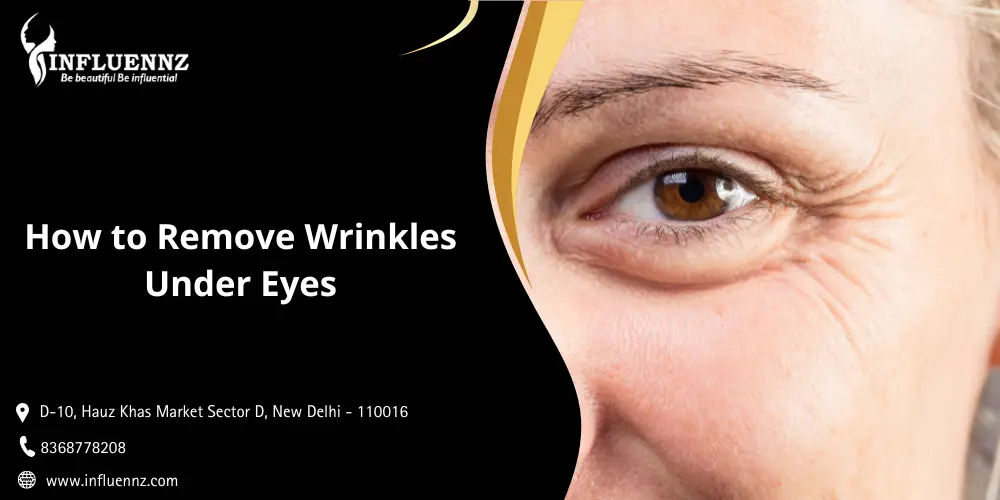
Wrinkles under the eyes are one of the earliest and most noticeable signs of ageing, often making the face appear tired, dull, or older than its actual age. Due to the thin and delicate nature of under-eye skin, these concerns require a targeted and medically guided treatment approach rather than general skincare solutions.
At Influennz Clinic, under the expertise of Dr. Geetika Srivastava—an AIIMS-trained MD dermatologist with 10+ years of experience in anti-aging treatments—under-eye wrinkle treatments are customized based on the root cause, skin type, and severity of ageing. With the right diagnosis and advanced techniques, it is possible to safely reduce fine lines, improve skin texture, and restore a naturally refreshed appearance. Book a consultation to get a personalized under-eye treatment plan for visible and long-lasting results.

Common Causes of Wrinkles Under Eyes
1. Frequent Eye Rubbing
One of the most common causes of under-eye wrinkles is rubbing the eyes. Many people rub their eyes to relieve tiredness or irritation, especially at the end of the day. However, this habit causes repeated injury to the delicate under-eye skin, leading to collagen breakdown and early wrinkle formation.
Dr. Geetika Srivastava strongly advises avoiding eye rubbing to prevent premature ageing.
2. Not Wearing Prescribed Spectacles
When spectacles are prescribed but not worn, the eyes strain to focus. This causes repeated contraction of the muscles around the eyes. Over time, this continuous muscle movement can result in early wrinkles and fine lines, particularly around the under-eye area.
3. Allergies and Chronic Eye Conditions
Conditions such as:
- Allergic rhinitis
- Allergic sinusitis
- Atopic dermatitis
can cause itching, inflammation, and frequent rubbing around the eyes. These factors accelerate collagen damage and contribute to early under-eye wrinkles.
4. Dry Skin and Skin Conditions
In conditions like atopic dermatitis, the skin tends to be dry all over the body, including under the eyes. Dry skin makes fine lines appear deeper and more prominent, worsening the appearance of under-eye wrinkles.
5. Natural Ageing
With age, the skin naturally loses collagen and elastin, which are responsible for firmness and elasticity. This loss causes the skin to lose its turgor and fold into lines, leading to wrinkles under the eyes.
6. Genetic Factors
Genetics also play a role. In some individuals, under-eye wrinkles may appear earlier due to inherited skin structure and collagen quality.
Best Dermatologist-Approved Treatments for Under-Eye Wrinkles
Botox: The Gold Standard Treatment
Botox injections are the most effective and widely recommended treatment for fine line around eyes.
- Botox relaxes the muscles responsible for wrinkle formation
- Best suited for wrinkles that appear during facial expressions
- Completely smoothens dynamic wrinkles
- Reduces static wrinkles, though they may not disappear entirely
Results Timeline:
- Visible improvement: within 3 days
- Maximum effect: 14 days
- Duration of results: 4–6 months
The number of units required, and hence the cost, depends on wrinkle depth and muscle activity. A dermatologist consultation is essential to determine suitability.
Under-Eye Creams That Help Reduce Fine Lines
Topical treatments play a supportive role in managing under-eye wrinkles, especially in early stages.
Key Ingredients to Look For:
- Retinol – stimulates collagen production
- Peptides – strengthen skin structure
- Hyaluronic acid – hydrates and plumps the skin
Hyaluronic acid attracts water into the skin, making fine lines appear softer and less visible.
Dermatologist-Preferred Under-Eye Creams:
- RoC Under Eye Cream
- Avène Under Eye Cream
- Neutrogena Hydro Boost Eye Gel
These products must be used consistently for 3–4 months to see noticeable improvement. They are not instant solutions but provide gradual, long-term benefits.
Is Tretinoin Safe for Under the Eyes?
While tretinoin is effective for reducing wrinkles, the under-eye area is extremely sensitive. Dr. Geetika Srivastava does not recommend using tretinoin under the eyes without medical supervision, especially for individuals with dry or sensitive skin.
If considering tretinoin for under-eye wrinkles, consulting a dermatologist is essential to avoid irritation or damage.
Chemical Peels for Under-Eye Wrinkles
Mild chemical peels can improve fine lines and skin texture under the eyes.
Commonly used peels include:
- Arginine peel
- Lactic acid peel
- Mandelic acid peel
These peels require 6–8 sessions for visible improvement and work by exfoliating dead skin cells and stimulating collagen production.
Advanced Treatments: Lasers & Microneedling RF
Fractional CO₂ Laser & Microneedling RF
These treatments stimulate collagen by creating controlled thermal injury in the skin.
- Tighten under-eye skin
- Improve skin texture
- Reduce fine lines and wrinkles
Typically, 3–4 sessions are required, spaced two months apart, for optimal results.
Hyaluronic Acid Fillers for Under-Eye Wrinkles
For individuals with tear troughs (under-eye hollowness) along with fine lines, hyaluronic acid fillers are an effective treatment option for under eye wrinkles.
- Fill hollowness
- Attract water and plump the skin
- Improve both wrinkle depth and skin quality
This procedure should always be performed by an experienced dermatologist due to the sensitivity of the under-eye area.
Conclusion: Choosing the Right Treatment for Under-Eye Wrinkles
There is no single solution that works for everyone. The best way to remove wrinkles under eyes depends on:
- Age
- Type of wrinkles (dynamic or static)
- Skin type
- Presence of dryness or hollowness
From habit correction and skincare to Botox, peels, lasers, and fillers, a customised dermatology approach offers the safest and most effective results.
For accurate diagnosis and personalised treatment, consulting an experienced dermatologist like Dr. Geetika Srivastava (AIIMS-trained) ensures natural-looking and long-lasting improvement in under-eye wrinkles.