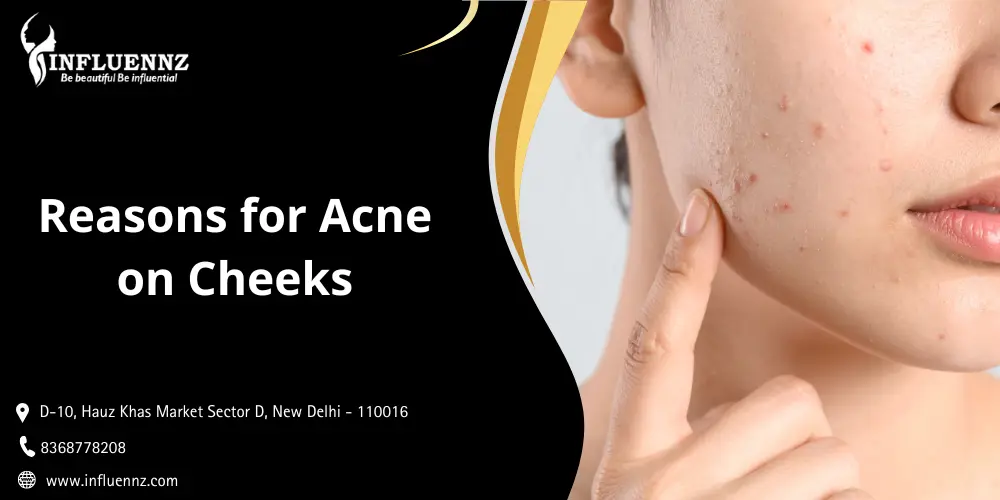
Acne on the cheeks can be frustrating, especially when it keeps returning no matter what you try. Since the cheeks cover a large, visible portion of the face, breakouts here can greatly affect confidence and skin texture. The good news? Understanding why cheek acne happens is the first step to clearing it effectively.
In this blog, we’ll break down the main reasons for acne on cheeks, explain hormonal acne on cheeks, and share dermatologist-approved methods to get rid of cheek acne. And if you want personalized treatment, Dr. Geetika Srivastava at Influennz Clinic is one of Delhi’s trusted experts in advanced acne treatment.
What Causes Acne on Cheeks? (Top Reasons You Should Know)
Cheek acne is different from forehead or nose acne because the cheeks are highly exposed to environmental factors, lifestyle habits, and hormonal shifts. Here are the most common triggers:
1. Dirty Pillowcases & Mobile Phone Screens
Your cheeks come in contact with multiple surfaces daily.
- Pillowcases collect oil, sweat, dust, and bacteria
- Mobile screens carry germs transferred from hands and surfaces
When these touch your cheek repeatedly, pores clog, and breakouts appear.
2. Hormonal Imbalances
A sudden increase in androgen hormones can overstimulate oil glands, causing inflammation. This leads to deeper, painful pimples that often appear on the cheeks and jawline.
3. Using Wrong Skincare Products
Heavy moisturizers, comedogenic makeup, and harsh scrubs can irritate the skin barrier and block pores.
4. PCOS or Internal Health Issues
Women experiencing PCOS or high insulin levels may notice stubborn cheek acne that doesn’t go away easily.
5. Excess Face Touching
Resting your hands on your cheeks or touching your face frequently transfers oil and bacteria.
6. Environmental Pollution
For people living in metro cities like Delhi, dust and pollution particles can trigger cheek inflammation and clogged pores.
Hormonal Acne on Cheeks: Why It Happens
Hormonal acne often shows up along the cheeks, jawline, and chin, especially in women between 20–40.
You may be experiencing hormonal acne on your cheeks if your breakouts:
- Are painful, cystic, or deep-seated
- Appear more around your menstrual cycle
- Come with oily skin or increased facial hair
- Do not respond to regular skincare
This type of acne needs internal balance along with professional skincare. A dermatologist like Dr. Geetika Srivastava can help identify the root cause and create a personalized treatment plan based on your hormones, skin type, and lifestyle.
How to Get Rid of Cheek Acne (Dermatologist-Approved Tips)
Clearing cheek acne requires a combination of proper skincare, lifestyle correction, and targeted treatments. Here’s what works best:
1. Keep Your Pillowcases & Phones Clean
Change pillow covers every 2–3 days. Wipe phone screens regularly with alcohol wipes
2. Use Non-Comedogenic Skincare
Choose products labeled:
- “Non-comedogenic”
- “Oil-free”
- “Lightweight gel-based”
3. Introduce Active Ingredients
Dermatologists recommend:
- Salicylic Acid – unclogs pores
- Niacinamide – reduces inflammation
- Retinoids – accelerate cell turnover
- Benzoyl Peroxide – targets acne-causing bacteria
4. Manage Hormones
If the cause is hormonal, treatments may include:
- Oral medications
- Supplements
- Lifestyle changes
- PCOS management
5. Avoid Touching Your Face
Be mindful of hand-to-face contact, especially while working, traveling, or sleeping.
6. How to Treat Cheek Acne for Faster Results
Cheek acne often requires clinical treatments for long-term improvement, including:
- Chemical peels
- Laser treatments
- Hydrafacial for deep cleansing
- Acne extraction
- LED therapy
- Prescription medication
At Influennz Clinic, Dr. Geetika Srivastava provides customized acne treatment plans designed specifically for cheek acne, ensuring visible improvement in texture, inflammation, and scarring.
When to See a Dermatologist
If your cheek acne is:
- Persistent
- Painful
- Leaving behind scars or pigmentation
- Worsening around your periods
- Not responding to OTC skincare
…it’s time to consult a dermatologist.
Early intervention prevents long-term scarring, and professional care often delivers faster, safer, and more permanent results.
Conclusion
Acne on the cheeks can be caused by lifestyle habits, hormonal changes, or environmental factors. With the right skincare routine for both men and women, healthy habits, and professional treatments, cheek acne can be effectively managed and controlled. If you’re tired of recurring breakouts and want expert guidance, Dr. Geetika Srivastava at Influennz Clinic offers advanced, personalized acne solutions tailored to your skin’s needs.