
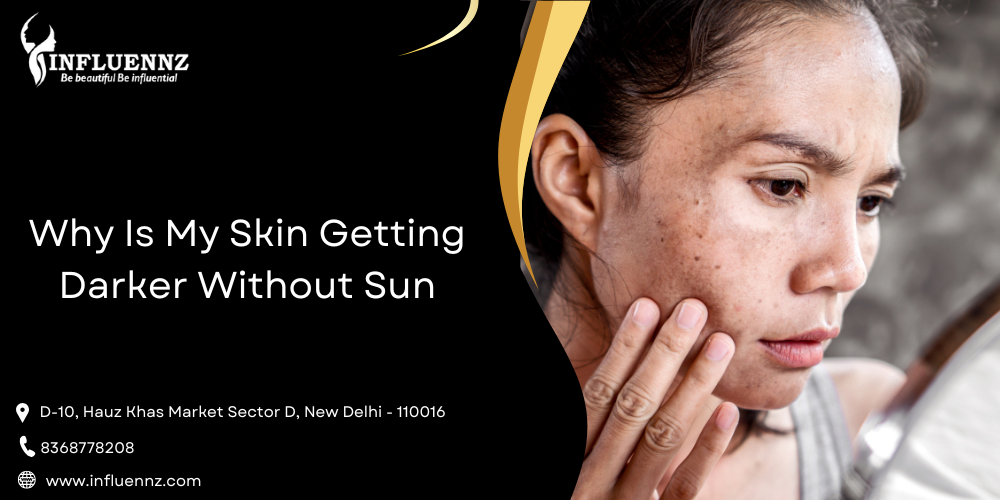
Have you noticed your skin looking darker lately, even though you haven’t been out in the sun much? Maybe your face looks dull, your neck appears slightly darker, or you’re seeing pigmentation around your underarms or body folds. Naturally, the first thought is:
“Am I tanning?” But what if you’re barely stepping outdoors?
As a dermatologist, I want to reassure you: skin darkening without sun exposure is more common than most people realize. And in many cases, it has less to do with tanning and more to do with internal, hormonal, lifestyle, or skin-related triggers.
In this blog, I’ll explain the real reasons your skin may be getting darker without sun, when you should be concerned, and what you can do to treat it safely.
First Things First: Is It Really Skin Darkening or Pigmentation?
Before jumping to conclusions, it’s important to understand that not all “darkening” is the same.
Sometimes what people describe as dark skin is actually:
- Uneven pigmentation
- Dullness or dehydration
- Patchy hyperpigmentation
- Post-acne marks
- Shadowing in body folds
Ask yourself:
- Is the change gradual or sudden?
- Is it affecting specific areas like the face, neck, or underarms?
- Are there patches, or is the entire skin tone changing?
This helps determine whether it’s a cosmetic concern or something that needs medical attention.
Top Reasons Your Skin May Be Getting Darker Without Sun
Let’s explore the most common dermatological causes behind this search query:
1. Hormonal Changes (One of the Biggest Triggers)
Hormonal imbalance is one of the leading reasons people experience pigmentation without sun exposure.
Conditions like:
- Pregnancy-related pigmentation
- PCOS (Polycystic Ovary Syndrome)
- Thyroid disorders
- Perimenopause
- Birth control pills
…can stimulate melanin production in the skin, leading to pigmentation conditions such as melasma.
Melasma often appears as brown patches on the cheeks, forehead, or upper lip, even in people who avoid sunlight.
Key point: Hormonal pigmentation requires medical guidance, not just skincare products.
2. Post-Inflammatory Hyperpigmentation (PIH)
Another very common cause is post-inflammatory hyperpigmentation, which happens after the skin undergoes inflammation or injury.
This includes pigmentation left behind after:
- Acne
- Eczema or rashes
- Allergic reactions
- Burns or insect bites
- Over-exfoliation
Even if the original issue heals, the skin may remain darker for weeks or months because melanin production increases during healing.
Many patients tell me:
“The pimple is gone, but the mark won’t fade.”
That is classic PIH.
3. Friction and Darkening in Body Folds
Skin darkening can also develop due to constant friction or irritation, especially in sensitive areas like:
- Underarms
- Inner thighs
- Neck
- Groin folds
Triggers include:
- Tight clothing
- Shaving
- Waxing irritation
- Obesity-related rubbing
In some cases, thickened dark skin in folds may indicate acanthosis nigricans, which can be linked to insulin resistance.
4. Insulin Resistance or Early Diabetes Warning Signs
Many people don’t realize that pigmentation can sometimes reflect internal metabolic changes.
Dark patches around the:
- Neck
- Underarms
- Body folds
…may be an early sign of insulin resistance or pre-diabetes.
This does not mean pigmentation always equals diabetes, but it does mean you should not ignore sudden darkening in these areas.
A dermatologist may recommend basic blood tests if the pattern is suggestive.
5. Stress, Cortisol & Skin Pigmentation Connection
Chronic stress affects the skin more than we think.
High cortisol levels can:
- Increase inflammation
- Worsen hormonal imbalance
- Trigger pigmentation flare-ups
- Reduce skin repair
Stress-related pigmentation is especially common in urban lifestyles where sleep, diet, and routine are disrupted.
Healthy skin is not only topical — it’s internal.
6. Vitamin Deficiencies and Poor Nutrition
Certain nutritional deficiencies may make the skin appear darker, dull, or uneven.
Common contributors include:
- Vitamin B12 deficiency
- Iron deficiency anemia
- Low vitamin D levels
- Poor antioxidant intake
When the body lacks essential nutrients, skin cell turnover slows down, leading to a tired, darker appearance. A balanced diet is an underrated part of pigmentation treatment.
7. Medication Side Effects
Some medications can trigger pigmentation as a side effect, including:
- Hormonal treatments
- Certain antibiotics
- Anti-seizure drugs
- Chemotherapy-related medicines
If pigmentation started after a new medication, consult your doctor rather than stopping anything abruptly.
8. Pollution and Indoor Light Exposure (Yes, Even Without Sun!)
Even if you avoid direct sunlight, your skin is still exposed to environmental triggers like:
- Air pollution
- Blue light from screens
- Visible light exposure near windows
Pollution creates oxidative stress, which can stimulate melanin production and worsen pigmentation over time.
This is especially relevant in cities like Delhi, where pollution-related pigmentation is increasingly common.
Could It Be a Skin Condition?
Sometimes pigmentation is a sign of a dermatological diagnosis, such as:
- Melasma
- Lichen planus pigmentosus
- Addison’s disease (rare)
- Acanthosis nigricans
- Chronic dermatitis-related pigmentation
This is why self-treatment with random creams can delay proper care.
When Should You Worry? Red Flags to Watch For
You should consult a dermatologist if:
- Darkening is sudden and widespread
- Patches are thick, itchy, or spreading
- Pigmentation appears with fatigue, weight changes, or hormonal symptoms
- Home remedies are not helping after 6–8 weeks
- Darkening occurs in unusual patterns
Your skin often reflects internal health — don’t ignore persistent changes.
How to Stop Skin from Getting Darker (Dermatologist-Approved Steps)
Here are safe, effective measures:
1. Wear Sunscreen Daily — Even Indoors
Yes, even if you’re inside most of the day.
UV rays and visible light can still penetrate windows and worsen pigmentation.
Choose:
- Broad-spectrum SPF 50
- Tinted sunscreen if prone to melasma
2. Avoid Harsh Scrubs or Random Bleaching Creams
Over-exfoliating or using steroid-based fairness creams can worsen pigmentation long-term.
Gentle skincare is essential.
3. Use Clinically Proven Brightening Ingredients
Dermatologist-approved ingredients include:
- Vitamin C
- Niacinamide
- Azelaic acid
- Kojic acid (with supervision)
- Retinoids (if suitable)
Consistency matters more than product hopping.
4. Address Lifestyle Triggers
- Improve sleep
- Reduce stress
- Treat hormonal imbalances
- Maintain healthy weight
- Eat antioxidant-rich foods
Pigmentation is often a combination issue — not just a surface problem.
Best Dermatology Treatments for Persistent Pigmentation
If pigmentation doesn’t improve with skincare alone, advanced treatments may help:
- Chemical peels
- Laser toning for melasma
- Medical-grade depigmenting creams
- Combination therapy tailored to your skin type
At Influennz Clinic, we always focus on treating the root cause, not just the pigment.
Final Thoughts: Don’t Ignore Unexplained Skin Darkening
If your skin is getting darker without sun exposure, it is not something to panic about — but it is something to understand.
In most cases, pigmentation is treatable once we identify the trigger, whether it’s hormonal, inflammatory, nutritional, or lifestyle-related.
Your skin is not just changing randomly — it’s giving you a signal.
Need Expert Help for Pigmentation?
If you’re experiencing persistent skin darkening, uneven tone, or unexplained pigmentation, consult a dermatologist for the right diagnosis and treatment plan.
At Influennz Clinic, Delhi, we offer advanced pigmentation solutions tailored to your skin.
📍 Book your pigmentation consultation today.
Frequently Asked Questions
Why is my face getting darker even though I stay indoors?
Indoor exposure to visible light, pollution, hormones, and inflammation can all contribute.
Can hormones really make your skin darker?
Yes. Hormonal fluctuations are one of the top causes of melasma and pigmentation.
Is sudden pigmentation a sign of diabetes?
Sometimes dark folds may suggest insulin resistance, so evaluation is recommended.
How long does pigmentation take to fade?
Most pigmentation takes 8–12 weeks or longer depending on the cause and treatment.