Best Pigmentation Treatment in Delhi
Pigmentation concerns like dark spots, melasma, and uneven skin tone can affect both appearance and confidence. At Influennz Clinic, Hauz Khas, South Delhi, Dr. Geetika Srivastava (AIIMS, MD), a leading pigmentation specialist in Delhi, offers advanced pigmentation treatment in Delhi backed by 10+ years of clinical experience. Every treatment plan is personalized to your skin type and concern, focusing on safe, effective, and long-term improvement for clearer, more even-toned skin..
Our team typically responds within 1 hour
Meet Your Dermatologist for Pigmentation Treatment
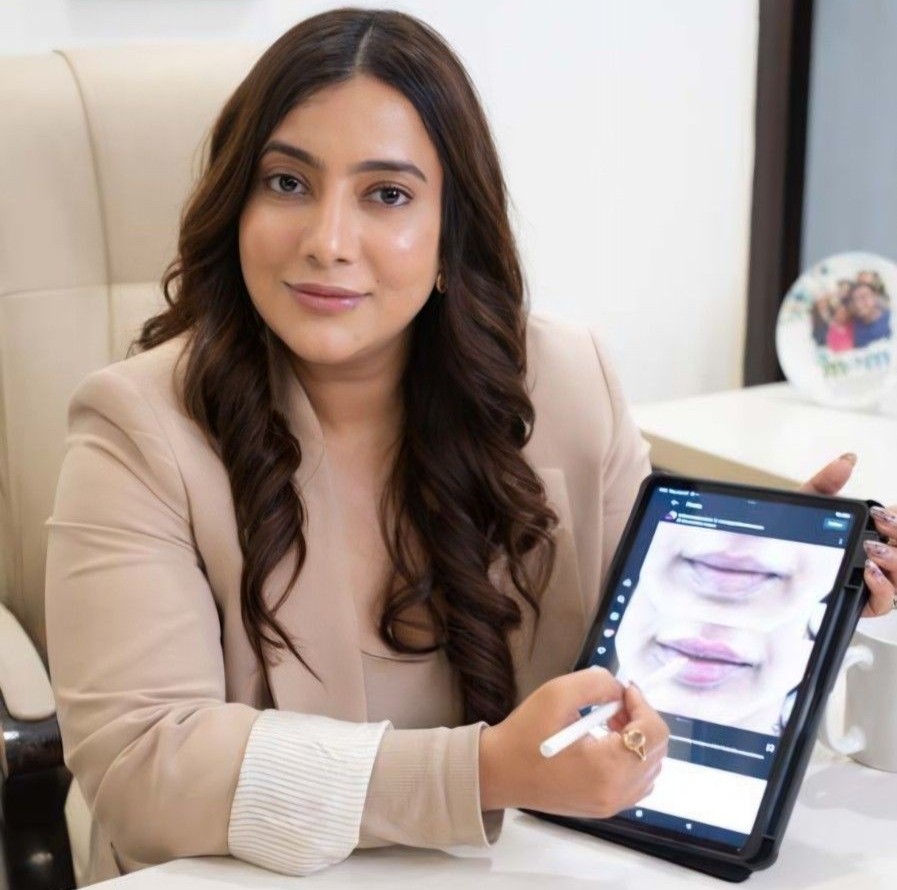
Qualifications & Expertise
- MBBS: Lady Hardinge Medical College, New Delhi
- MD (Dermatology): All India Institute of Medical Sciences (AIIMS)
- Certifications: Laser, Aesthetic & Cosmetic Dermatology — International Academies
- Fellowship: Dermatosurgery & Laser — American Society for Laser Medicine & Surgery
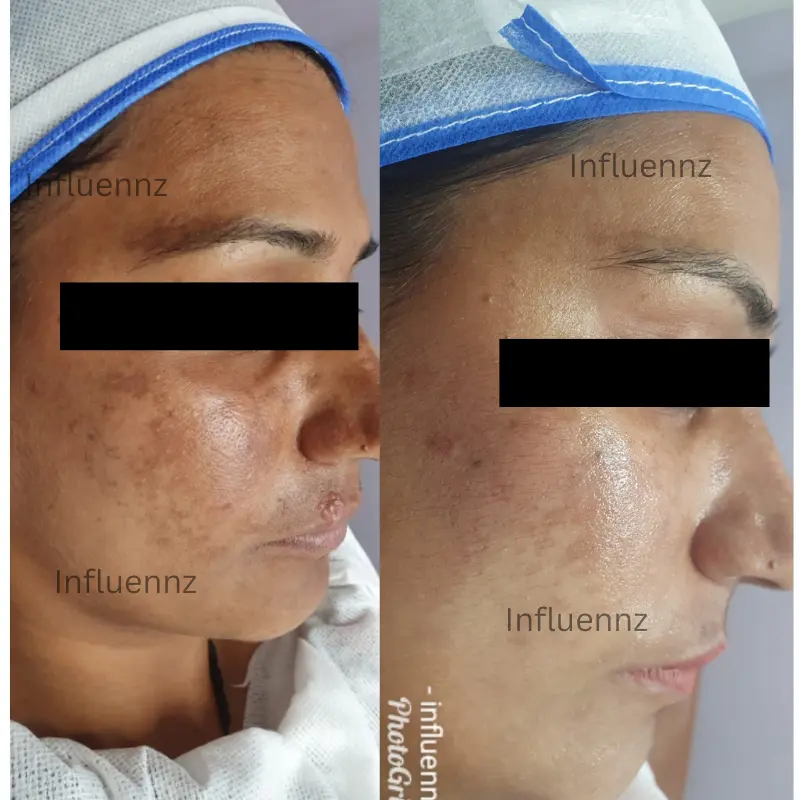
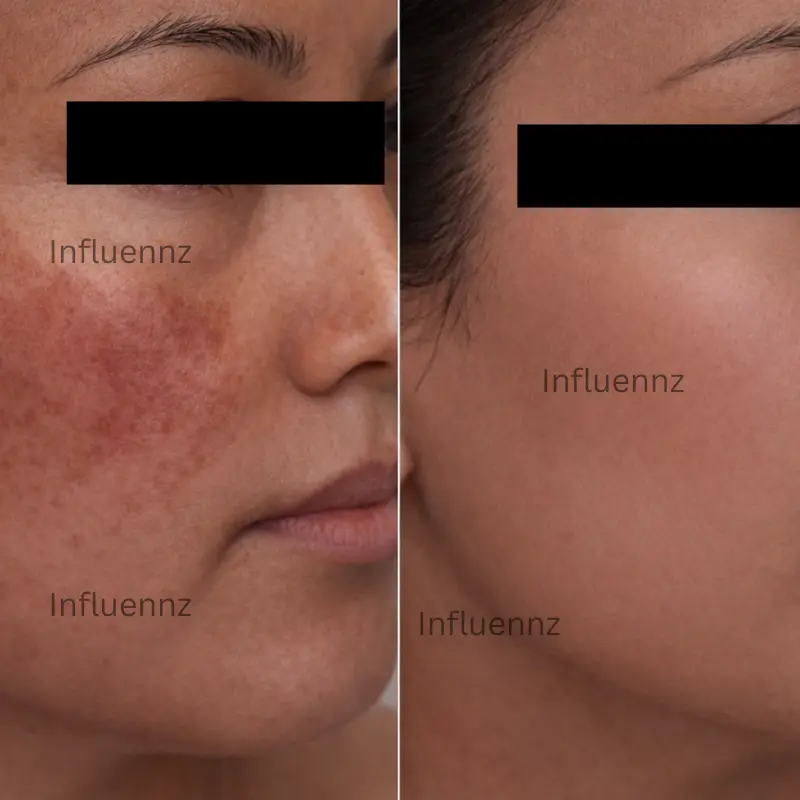
Pigmentation Treatment Before & After Results
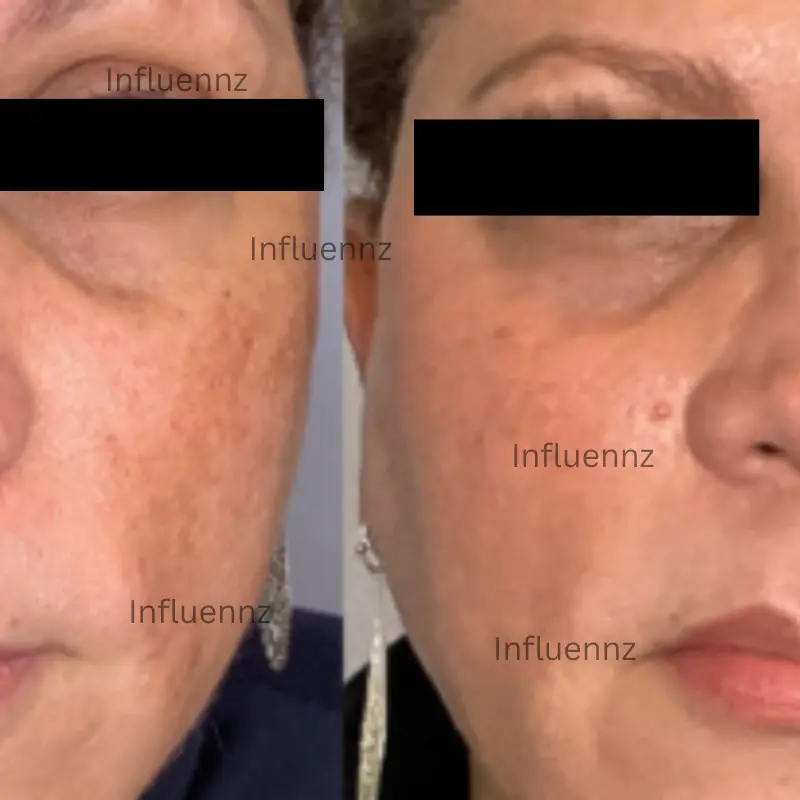
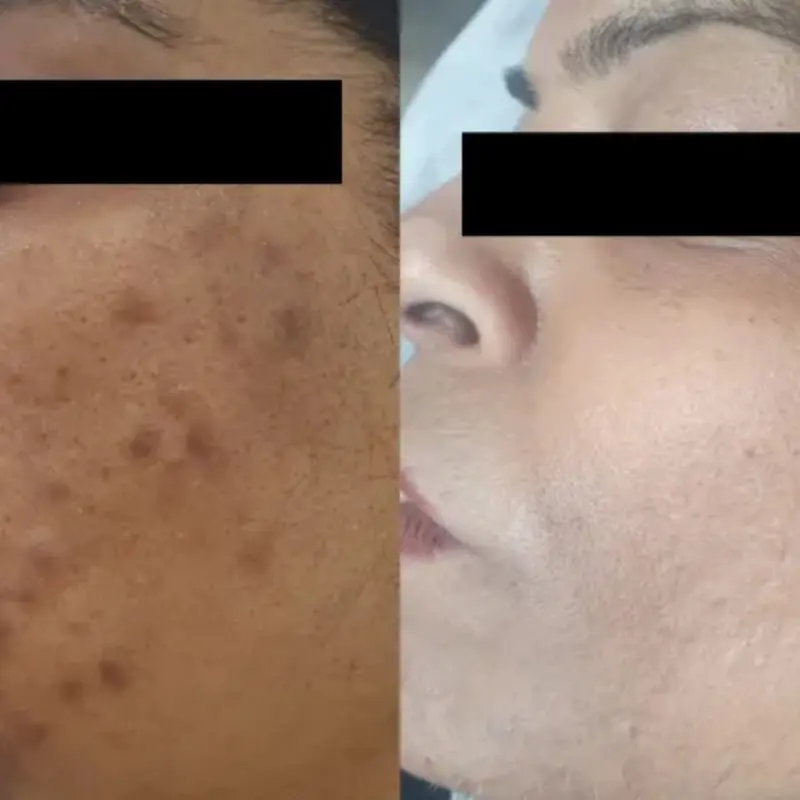
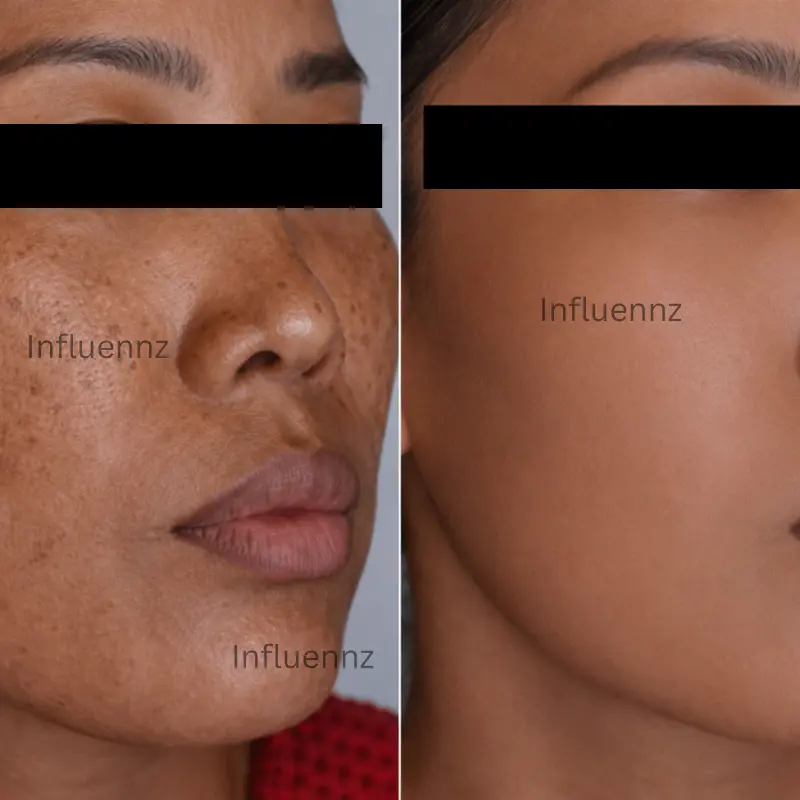
Targeted Solutions for Pigmentation & Uneven Skin Tone
Pigmentation treatment in South Delhi is a specialized approach to reducing hyperpigmentation, dark spots, discoloration, and uneven skin tone. Pigmentation occurs when melanin is produced excessively in certain areas, resulting in dark patches, freckles, or age spots. At Influennz Clinic, Hauz Khas, Delhi, our dermatologists assess the underlying cause and skin type before creating a personalized treatment plan for clearer, more even-toned skin. If you're looking for pigmentation treatment in Hauz Khas or South Delhi, our customized approach focuses on safe, effective, and long-term improvement.
Types of Pigmentation Issues Treated
Influennz Clinic effectively treats several types of pigmentation problems, ensuring that each client receives a solution that caters to their specific needs:
- Sunspots: These dark spots appear due to prolonged sun exposure. Our skin pigmentation treatment can help lighten these spots, leaving you with even-toned skin.
- Melasma: A common issue among women, often triggered by hormonal changes, especially during pregnancy or with the use of birth control pills. It appears as large brown or grey-brown patches, typically on the face.
- Post-inflammatory Hyperpigmentation: This occurs after an injury, acne, or any kind of inflammation, leaving dark marks behind.
- Freckles: Our dermatologists offer effective treatments to reduce or eliminate freckles, helping you achieve the desired skin appearance.
- Age Spots: Common in older adults, caused by years of sun exposure. These can be effectively treated with advanced treatments to restore your skin's natural tone.
What Causes Pigmentation? Understanding the Root Before Treating It
Treating pigmentation without understanding why it developed in the first place is one of the most common reasons people cycle through creams and treatments without lasting results. Before recommending any pigmentation removal treatment, Dr. Geetika Srivastava evaluates what's actually driving the discolouration, because the cause changes what will and won't work.
The most common triggers seen at the clinic:
Individualized Assessment
Dr. Geetika Srivastava (MD, AIIMS)Two people with dark patches in the same spot on their face can have entirely different underlying causes — one might be melasma needing a gentle, patient approach, and the other might be old acne marks that respond well to a more active peel. This is exactly why a proper evaluation, not a generic pigmentation removal treatment applied to everyone the same way, is the starting point at Influennz.
Sun exposure: UV rays trigger melanocytes to produce more melanin as a protective response, which is why sunspots and tanning-related pigmentation are so common in Delhi's climate, especially given the city's long, intense summer months.
Hormonal changes: pregnancy, birth control pills, and hormonal fluctuations linked to conditions like PCOD can trigger melasma, a specific type of pigmentation that behaves differently from sun-related spots and needs a more cautious, longer-term treatment approach.
Post-inflammatory changes: any inflammation to the skin — acne, an injury, an insect bite, even an aggressive facial or peel done incorrectly elsewhere — can leave a dark mark behind as the skin overproduces melanin while healing.
Genetics and skin type: family history plays a role in how much melanin your skin produces and how it responds to sun exposure, which is part of why the right treatment for one person's freckles or age spots may not suit another's.
Certain medications: some medications can increase photosensitivity or directly affect melanin production, which is one of the things reviewed during your medical history at consultation.
Melasma vs Hyperpigmentation vs Dark Circles: Why the Difference Matters
Patients often use "pigmentation" as a catch-all word, but from a treatment standpoint, not all dark patches are the same condition, and mixing them up is one of the most common reasons a treatment for pigmentation on face doesn't deliver the expected result.
Melasma
Melasma sits deeper in the skin, often appears symmetrically on both cheeks, the forehead, or upper lip, and is driven mainly by hormones and sun exposure together. It requires a gentler, more gradual approach, because aggressive treatment can actually trigger a rebound flare. Influennz has a dedicated Melasma Treatment page covering this condition specifically, since it deserves its own protocol rather than being treated identically to sunspots.
Post-Inflammatory (PIH)
Post-inflammatory hyperpigmentation (PIH) sits more superficially, follows the exact shape of whatever caused it (an old acne spot, a scratch, a bug bite), and generally responds faster to treatment than melasma does.
Sunspots & Age Spots
Sunspots and age spots are usually well-defined, isolated, and directly correlated with cumulative sun exposure over the years rather than hormones.
Dark Circles Under Eyes
Dark circles under the eyes are frequently mistaken for pigmentation but often have a mixed cause — genuine pigmentation, thinning skin that shows blood vessels through it, or shadowing from volume loss — which is why Influennz treats this separately on its dedicated Dark Circles Treatment page rather than folding it into general pigmentation care.
Hormonal Pigmentation: Why Melasma and PCOD-Linked Pigmentation Need a Different Approach
A specific pattern seen often at the clinic is pigmentation that's tied to hormones rather than sun exposure alone — melasma during or after pregnancy, pigmentation linked to birth control pills, or persistent facial darkening in women with PCOD (polycystic ovary syndrome).
This category of pigmentation treatment in Delhi needs a different mindset than treating a sunspot: hormonally driven pigmentation can worsen with aggressive laser or peel treatment if the underlying hormonal trigger is still active, and it's more prone to recurrence than sun-related pigmentation once treatment stops.
At consultation, if hormonal pigmentation is suspected, Dr. Geetika will typically ask about your menstrual cycle regularity, any PCOD diagnosis, pregnancy status, and current birth control use — not to overstep into a separate medical workup, but because these details change how conservatively treatment should proceed and how the maintenance plan is structured afterward.
The practical takeaway: if your pigmentation appeared or worsened during pregnancy, after starting a hormonal medication, or alongside other PCOD symptoms, it's worth mentioning this specifically at your consultation rather than only describing the visible spots. It changes the treatment plan meaningfully, and it's exactly the kind of detail a generic skincare routine or an untrained aesthetician wouldn't think to ask about.
Advanced Pigmentation Treatments at Influennz Clinic
At Influennz Clinic Hauz Khas, South Delhi we offer advanced pigmentation treatments in Delhi designed to reduce dark spots, uneven skin tone, and other common forms of skin pigmentation. Depending on the type and severity of pigmentation, our dermatologist may recommend laser treatments, chemical peels, microneedling, topical treatments, or IPL therapy.
Laser Treatment for Pigmentation
Laser treatment for pigmentation targets excess melanin responsible for dark spots, uneven skin tone, and stubborn pigmentation. At Influennz Clinic, advanced laser technology such as Candela GentleMax Pro may be used to target pigmentation while supporting a more even and clearer complexion. The choice of laser treatment depends on your skin type, pigmentation concern, and clinical assessment.
Chemical Peels for Pigmentation
Chemical peels for pigmentation use controlled exfoliation to remove damaged surface skin cells and improve the appearance of dark spots and uneven skin tone. Depending on the pigmentation concern, medical-grade peels containing ingredients such as glycolic acid or salicylic acid may be recommended. Chemical peel treatment for pigmentation can also promote skin renewal, helping reveal smoother and more even-looking skin.
Microneedling for Pigmentation
Microneedling for pigmentation uses controlled micro-injuries to stimulate collagen production and support skin regeneration. It can be considered for pigmentation concerns such as post-inflammatory hyperpigmentation (PIH), acne marks, and dark spots. Microneedling may also be combined with suitable topical serums when recommended by a dermatologist to improve overall skin texture and pigmentation.
Topical Treatment for Pigmentation
Topical treatment for pigmentation includes dermatologist-recommended creams and serums that help reduce excess melanin production and improve uneven skin tone. These pigmentation treatments may contain clinically appropriate ingredients selected according to the individual's skin type and pigmentation concern. Topical treatment is often used as part of a broader pigmentation management plan.
IPL Treatment for Pigmentation
IPL treatment for pigmentation uses controlled pulses of light to target excess melanin and improve the appearance of sun spots, freckles, and other pigmentation concerns. Intense Pulsed Light (IPL) can help improve uneven skin tone and overall skin appearance with minimal downtime. A dermatologist can determine whether IPL is suitable based on your pigmentation type and skin characteristics.
Laser, Chemical Peels, or Microneedling: Which Pigmentation Treatment Fits You?
The sections above cover each treatment option individually — here's how Dr. Geetika actually decides between them for a specific treatment for pigmentation on face, since patients often ask which one is "best" as if there's a single universal answer.
Laser Treatment
First choice for well-defined, isolated sunspots, freckles, and stubborn dark spots that haven't responded to peels, particularly when a patient wants a more direct approach and can commit to sun protection afterward.
Chemical Peels
Starting point for post-acne marks, mild-to-moderate melasma, and general dullness, since they work gradually and carry a lower risk profile for darker skin tones compared to aggressive laser settings.
Microneedling
Considered when pigmentation is combined with textural concerns — acne scarring alongside dark marks, for instance — since it addresses both at once, and is often combined with topical serums for added effect.
IPL Therapy
Suits broader, milder pigmentation and overall dullness across larger areas rather than a single stubborn patch.
Topical Treatment
Rarely used alone for established pigmentation but plays a significant role either as the first step before considering a more active treatment, or as the maintenance phase after a laser or peel course is complete.
Custom Combination
Combining approaches (e.g. peel course + topical maintenance) tailored to skin tone, pigmentation depth, and prior response for lasting clearance.
- Laser treatment tends to be the first choice for well-defined, isolated sunspots, freckles, and stubborn dark spots that haven't responded to peels, particularly when a patient wants a more direct approach and can commit to sun protection afterward.
- Chemical peels are often the starting point for post-acne marks, mild-to-moderate melasma, and general dullness, since they work gradually and carry a lower risk profile for darker skin tones compared to aggressive laser settings.
- Microneedling is considered when pigmentation is combined with textural concerns — acne scarring alongside dark marks, for instance — since it addresses both at once, and is often combined with topical serums for added effect.
- IPL suits broader, milder pigmentation and overall dullness across larger areas rather than a single stubborn patch.
- Topical treatment is rarely used alone for established pigmentation but plays a significant role either as the first step before considering a more active treatment, or as the maintenance phase after a laser or peel course is complete.
In practice, most treatment plans at this pigmentation clinic in South Delhi combine two of these rather than relying on just one — for example, a course of peels to address surface pigmentation, followed by targeted topical treatment for maintenance. Which combination makes sense depends entirely on your specific pigmentation type, skin tone, and how your skin has responded to any treatments you've tried before.
Best Facial for Pigmentation
The best facial for pigmentation is a chemical peel, as it removes pigmented skin and promotes new cell growth. For deeper pigmentation, laser facials are more effective, while Hydrafacial helps with mild pigmentation and instant glow. For best results, a dermatologist-recommended combination treatment works most effectively.
Why Choose Influennz Clinic for Pigmentation Treatment
When searching for the best pigmentation doctor in Delhi or a trusted clinic for advanced skin treatments, Influennz Clinic is known for delivering safe, result-oriented care under expert supervision. Led by Dr. Geetika Srivastava, an AIIMS-trained MD dermatologist, the clinic combines medical expertise with advanced technology to treat all types of pigmentation concerns effectively.
Expert Dermatologists
Expert Dermatologists: Our team of experienced dermatologists specializes in diagnosing and treating pigmentation issues.
State-of-the-Art Technology
State-of-the-Art Technology: Our clinic is equipped with advanced tools such as the Candela GentleMax Pro for laser pigmentation treatments and high-quality medical-grade chemical peels for targeted results.
Personalized Treatments
Personalized Treatments: Each concern is different, and so at Influennz clinic, we evaluate your skin and advise you on the most effective pigmentation treatment plan suited for your condition.
Safe & Comfortable Environment
Safe and Comfortable Environment: We prioritize your safety and comfort with a relaxing and hygienic environment.
Benefits of Pigmentation Treatment
There are several benefits of opting for skin pigmentation treatment at Influennz Clinic:
Who Is a Suitable Candidate for Pigmentation Treatment?
The skin and lip pigmentation treatments offered at Influennz Clinic are suitable for individuals of all skin types who are dealing with pigmentation issues. If you are in good health and want to enhance the appearance of your skin, you are a good candidate for treatment. Our expert dermatologists will assess your condition and recommend the most appropriate treatment based on your skin type, age, and pigmentation concern.
Is Pigmentation Treatment Safe for Darker and Sensitive Skin Tones?
This is one of the most important safety questions in pigmentation treatment, and it deserves a direct answer: yes, when the right treatment and settings are chosen for your skin type — but this is precisely where an experienced dermatologist matters most.
Darker skin tones (Fitzpatrick types IV-VI, which cover the majority of Indian skin) carry a higher baseline risk of a treatment itself triggering new pigmentation — a reaction called post-inflammatory hyperpigmentation from the treatment, ironically the same problem you came in to treat. This happens when laser settings, peel strength, or microneedling depth are too aggressive for the skin's melanin content.
This is why, at any responsible pigmentation clinic, darker or more reactive skin isn't treated with the same default settings used on lighter skin — treatment intensity is adjusted downward, sessions are spaced to allow full healing, and a patch test is often done before committing to the full area, especially for laser-based options.
Sensitive skin (prone to redness, easily irritated, or with a history of eczema or rosacea) needs a similar cautious approach — usually starting with gentler options like low-strength peels or topical treatment before considering laser or aggressive microneedling.
None of this means darker or sensitive skin has fewer options; it means the plan is built around your skin's specific tolerance rather than a one-size-fits-all protocol, which is the core idea behind the best treatment for pigmentation on face at Influennz Clinic.
Cost of Pigmentation Treatment in Delhi
The cost of professional treatments for hyperpigmentation varies depending on the type of treatment, the severity of pigmentation, and the number of sessions required.
Lip Pigmentation
Laser Treatment
Facial Pigmentation
Laser Treatment
Underarm Pigmentation
Targeted Treatment
Chemical Peels
Topical Solutions
Will Pigmentation Come Back After Treatment?
It's a fair and important question, and the honest answer is: it can, depending on what caused it in the first place — worth knowing before you invest in a full course of treatment.
Sun-Related Pigmentation
Sun-related pigmentation (sunspots, age spots, tanning) can return if sun protection isn't maintained afterward, since the same UV exposure that caused it the first time will trigger it again.
Hormonally Driven Triggers
Hormonally driven pigmentation, particularly melasma, has a higher tendency to recur, especially around pregnancy, hormonal medication changes, or simply sun exposure, even after a successful course of treatment. This is one of the reasons melasma is treated as an ongoing condition to be managed rather than a one-time fix.
Post-Inflammatory Marks
Post-inflammatory marks generally don't return once the original trigger (acne, an injury) is resolved and no new inflammation occurs in the same spot.
Treatment Duration
Stopping treatment too early, before your dermatologist confirms the pigment has fully cleared, is another common reason results don't hold — a pigmentation removal treatment that's only partially completed can appear to "come back" simply because it was never fully cleared.
Sunscreen: Prevention Matters as Much as Treatment
No pigmentation treatment, however advanced, works well without consistent sun protection alongside it, and this is worth being direct about rather than mentioning briefly in an aftercare handout.
Delhi Climate & UV Reality
For Delhi specifically, this matters more than patients often expect. Between the intense summer sun, high pollution levels that can worsen oxidative skin stress, and the fact that UV exposure happens even on cloudy or winter days, daily sunscreen isn't a seasonal habit here — it's a year-round one for anyone actively treating or trying to prevent pigmentation.
Sunscreen doesn't reverse existing pigmentation on its own, but it does two things that matter just as much: it prevents new pigmentation from forming, and it protects the results of whatever treatment you've just had, since freshly treated skin is more reactive to UV exposure than untreated skin.
A broad-spectrum SPF 30-50 sunscreen, reapplied through the day if you're outdoors for extended periods, is generally recommended during and after any best treatment for pigmentation on face, and your dermatologist will advise on the right formulation for your skin type, especially if your skin is more reactive immediately after a peel or laser session.
Pigmentation Treatment Process
At Influennz Clinic, we follow a structured process for pigmentation treatment to ensure optimal results:
Initial Consultation
Initial Consultation: The process begins with an in-depth consultation, where we assess your skin's pigmentation issues and evaluate the type of pigmentation (sunspots, melasma, acne scars, etc.).
Personalized Plan
Personalized Treatment Plan: Based on the consultation, our dermatologists create a tailored treatment plan specific to your pigmentation concerns.
Pre-Treatment Prep
Pre-Treatment Preparation: Before any treatment, your skin is thoroughly cleansed. A numbing cream may be applied for laser treatments to minimize discomfort.
Treatment Session
Treatment Application: For pigmentation laser treatment, a focused laser beam targets the pigmented areas. For chemical peels, the solution is applied to the skin, exfoliating the top layer to reveal fresh skin beneath.
Aftercare & Follow-up
Aftercare and Follow-up: Post-treatment care is crucial for maximizing results. We provide aftercare instructions, including moisturizing and sun protection.
Planning Pigmentation Treatment Around a Wedding or Big Event
A significant number of patients come in wanting pigmentation treatment in Delhi timed around a wedding, engagement shoot, or another major event, and timing matters more here than for most other skin concerns.
Pigmentation treatment isn't a same-week fix. Peels and laser sessions typically need 4-6 weeks of spacing between appointments, and visible improvement builds gradually over a full course rather than appearing after one session. This means starting 3-4 months before the event gives the most realistic window for a full course plus a buffer for any redness or peeling to settle.
Freshly treated skin (post-peel or post-laser) can look pink or feel slightly sensitive for a few days, which is exactly why the last session in any pre-event plan should be scheduled several weeks out, never in the final week before the event itself.
For brides and grooms specifically, pigmentation treatment is frequently combined into a broader pre-wedding skin plan alongside other treatments — if that's the goal, it's worth looking at Influennz's dedicated Bridal Packages and Pre-Groom Packages, which are built around exactly this kind of multi-month timeline.
Delhi's seasonal shifts also factor in: starting a course right before peak summer sun or the humidity of monsoon season can work against your results if sun protection and aftercare aren't followed carefully, so your dermatologist will factor the calendar into your session spacing, not just your skin.
Pigmentation Treatment for Men
Pigmentation isn't a concern limited to any one gender, and a growing number of male patients come in for sun-induced dark spots, post-shaving or post-acne marks, and general uneven tone, particularly men who spend significant time outdoors for work or sport.
The evaluation and treatment approach at this pigmentation clinic is the same regardless of gender — cause, skin type, and severity determine the plan, not assumptions about who typically asks for this treatment. The main practical difference is often skincare routine: men are, on average, less likely to already be using daily sunscreen, which is usually one of the first and simplest additions to their treatment plan.
If beard-area skin or shaving-related pigmentation is part of the concern, this is worth mentioning at consultation, since it's treated somewhat differently from facial pigmentation elsewhere. Influennz's Face Treatment for Men page covers broader men's skin concerns alongside this.
Achieve Radiant Skin Today
At Influennz, one of the best skin care clinics in Delhi, we are committed to offering the best pigmentation treatment in Delhi. Whether you are dealing with sunspots, melasma, or acne scars, our expert team provides customized, effective solutions to give you clear, even-toned skin. Book a consultation today and take the first step towards beautiful, radiant skin!
Whatever type of pigmentation you're dealing with — sunspots, melasma, old acne marks, or something you're not quite sure how to describe — the right starting point is the same: an honest evaluation before any treatment plan. That's the approach behind every pigmentation treatment in Delhi offered at Influennz Clinic, and it's why patients across Hauz Khas and South Delhi return here not just for one session, but for an ongoing plan to keep their skin looking clear.
FAQs About Pigmentation Treatment
The number of sessions depends on the severity of your pigmentation. Typically, clients need 4-6 sessions for optimal results.
While the treatment may cause slight discomfort, it is generally well-tolerated. We use numbing creams to ensure your comfort during the procedure.
Results can be visible within a few weeks after the first treatment, but optimal results may take 2-3 months.
You can get safe and advanced pigmentation treatment at Influennz Clinic, South Delhi, led by Dr. Geetika Srivastava, one of the best dermatologists for pigmentation in Delhi. The clinic offers customized solutions like chemical peels, laser therapy, and advanced skin treatments for effective results.
The cost of laser treatment for pigmentation in Delhi usually starts from ₹3,000 to ₹8,000 per session, depending on the type of pigmentation and the number of sessions required.
Some types of pigmentation, particularly post-inflammatory marks and isolated sunspots, can be cleared very close to permanently with the right treatment and consistent sun protection afterward. Others, especially melasma and hormonally driven pigmentation, respond very well to pigmentation treatment in Delhi but carry a genuine chance of recurrence, since the underlying hormonal trigger doesn't disappear along with the visible pigment. Dr. Geetika sets realistic expectations for your specific type of pigmentation at consultation, rather than promising the same permanent outcome for every case.
Look for a pigmentation clinic where a qualified dermatologist personally evaluates your skin type and the underlying cause of your pigmentation before recommending treatment, rather than a fixed package applied to everyone. This matters most for darker skin tones and hormonally driven pigmentation like melasma, where the wrong approach can worsen the problem instead of fixing it. At Influennz, this evaluation is done directly by Dr. Geetika Srivastava (MD, AIIMS), which is a large part of why patients across Hauz Khas and South Delhi choose this pigmentation clinic in South Delhi over a walk-in aesthetic studio.