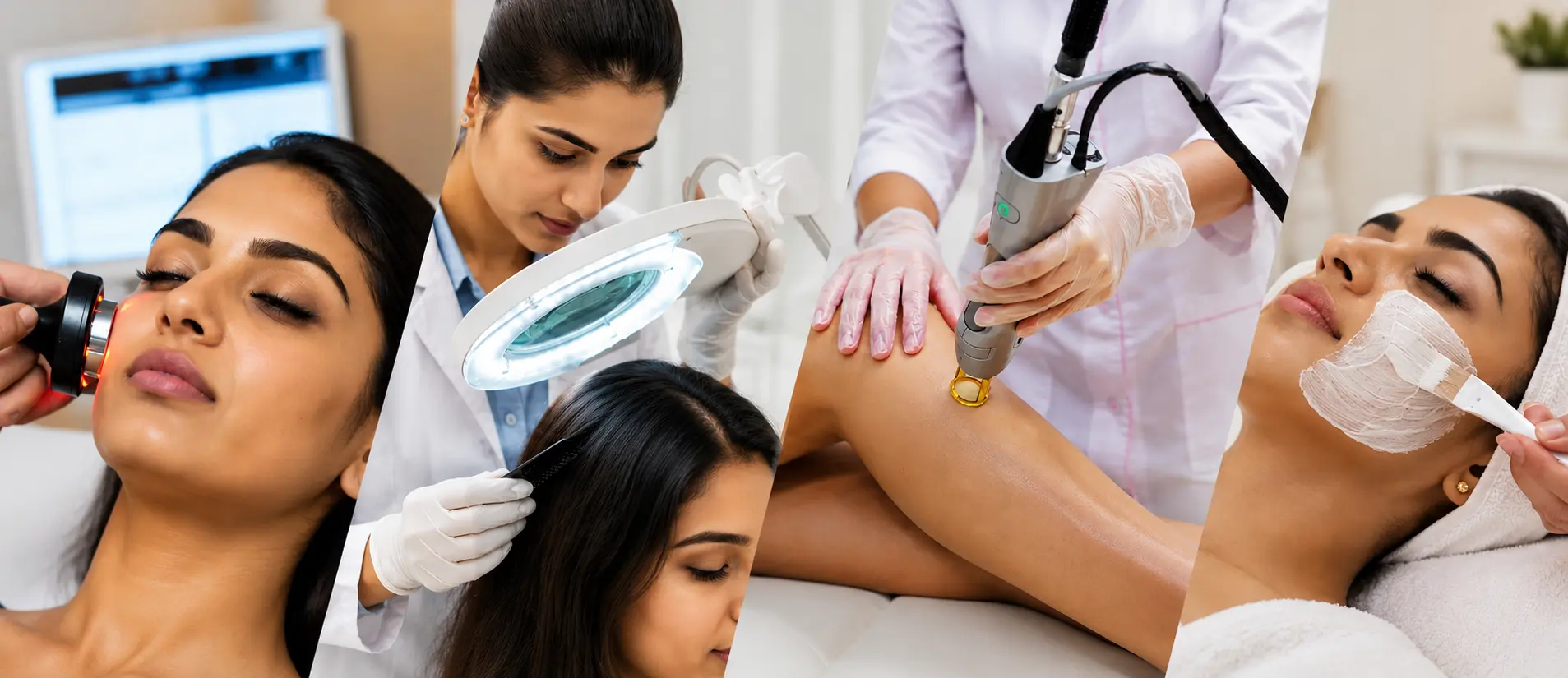
Laser Toning in Delhi: Get Even-Toned, Radiant Skin with Expert Dermatological Care
Uneven skin tone, stubborn tan, melasma patches and dull-looking skin are among the most common concerns patients bring to dermatology clinics across the capital, and laser toning in Delhi has become one of the most trusted, minimally invasive ways to treat them. At Influennz Aesthetic Skin Clinic in Hauz Khas, South Delhi, laser toning is performed under the direct supervision of Dr. Geetika Srivastava, an AIIMS-trained MD Dermatologist with over 10 years of clinical experience and 50,000+ patients treated.
Unlike quick-fix facials or unregulated "skin whitening" treatments sold at unlicensed parlours, laser toning is a clinically studied dermatological procedure. It works at a cellular level to reduce excess melanin while keeping the surface of the skin completely intact — which is why it has become the preferred choice for laser toning in South Delhi among patients who want visible, long-term improvement without downtime.
Our team typically responds within 1 hour
What Is Laser Toning?
Laser toning is a non-ablative, low-fluence laser procedure most commonly performed using a Q-switched Nd:YAG laser, delivered at repeated, gentle passes over the skin. The concept behind laser toning in Delhi — and everywhere else it is practised — is based on a dermatological principle called sub-cellular selective photothermolysis: the laser energy is precisely tuned to target only the melanosomes (the pigment-storing structures in skin cells) without damaging the surrounding skin or the epidermis above it.
In simple terms, the laser breaks down clumped, excess melanin into smaller fragments. Your body’s own lymphatic system then gradually clears these fragments over the following days and weeks, which is why results build up gradually rather than appearing overnight.
Key Biological Advantages of Low-Fluence Toning:
- Does not break the skin’s surface: Complete epidermal safety with zero cuts or abrasions.
- Requires no anaesthesia in most cases: Only a mild numbing cream if requested for sensitive skin.
- Causes no bleeding, scabbing or open wounds: Smooth, gentle recovery process.
- Allows patients to return to work the same day: Zero social downtime; perfect for busy lifestyles.
At Influennz Clinic in Hauz Khas, every session of laser toning in Hauz Khas begins with a detailed skin assessment by Dr. Geetika Srivastava, since the ideal laser settings differ significantly depending on skin type, the depth of pigmentation, and whether the underlying cause is sun damage, melasma, hormonal, or post-acne pigmentation.
Laser Toning vs Laser Resurfacing: What’s the Difference?
One of the most common questions patients ask before booking is the difference between laser toning and laser resurfacing — and it’s an important one, because the two procedures are used for very different problems.
| Feature | Laser Toning | Laser Resurfacing |
|---|---|---|
| Primary Goal | Reduces pigmentation, evens out skin tone | Improves skin texture, scars, deep wrinkles |
| How It Works | Targets melanin deep in the skin without touching the surface | Removes or resurfaces the outer skin layers (ablative or fractional) |
| Downtime | None to minimal (return to work immediately) | A few days to two weeks, depending on the laser type |
| Best For | Melasma, sun tan, dark spots, dull skin | Acne scars, deep wrinkles, uneven texture |
| Sessions Needed | Usually 5–8 sessions, spaced 2–4 weeks apart | Fewer sessions, but more intensive each time |
| Sensation | Mild warmth, virtually painless | Can require numbing or local anaesthesia |
In short: If your main concern is colour (pigmentation, tan, melasma, dullness), laser toning is usually the right starting point. If your concern is texture (scarring, deep lines, enlarged pores from structural damage), your dermatologist may recommend resurfacing options like Resurfx or Fractional CO2 instead — both of which are also available at Influennz Clinic. In many cases, Dr. Geetika combines the two in a phased treatment plan for patients who have both pigmentation and textural concerns.
Skin Toning Laser Treatment — What It Actually Treats
Patients often search for "skin toning laser treatment" expecting a single-purpose cosmetic procedure, but in a dermatologist-led clinic, it is used to manage a wide range of pigmentary and skin-quality concerns:
Melasma
Hormonal, sun-triggered pigmentation that commonly affects Indian women, especially post-pregnancy or with prolonged UV exposure.
Sun Tan & Photodamage
Deep tan lines and stubborn surface tanning caused by Delhi's harsh summers, UV radiation, and high pollution levels.
Post-Acne Marks (PIH)
Dark spots, brown patches, and post-inflammatory hyperpigmentation left behind after active acne breakouts heal.
Uneven Skin Tone
Patchy discolouration around the forehead, mouth, cheeks, and neck for a uniform, radiant complexion.
Pigmentary Dark Circles
Under-eye dark circles caused by excess melanin accumulation (not structural hollowness or volume loss).
Freckles & Age Spots
Concentrated melanin clusters and epidermal sun spots broken down safely into minute fragments for lymphatic clearance.
Dull, Tired Skin
Muted radiance revitalized as microscopic pigmentation is cleared and cellular turnover is stimulated.
Enlarged Pores
Subtle thermal stimulation boosts dermal collagen, tightening lax pores and refining overall skin texture.
This makes laser toning one of the most versatile procedures within pigmentation and skin-quality treatments, which is why it continues to be one of the most frequently booked treatments for patients researching laser toning in Delhi and laser toning in South Delhi specifically.
Is Laser Toning Safe for Indian Skin?
This is one of the most searched questions among patients before they book — and it’s a fair one, because Indian skin (Fitzpatrick skin types III–V) behaves very differently from lighter skin types under laser energy. Skin with more background melanin is more prone to a risk called post-inflammatory hyperpigmentation (PIH) if the wrong laser or the wrong energy settings are used.
This is exactly where an AIIMS-trained dermatologist’s judgment matters more than the machine itself. At Influennz, Dr. Geetika Srivastava calibrates the fluence (energy level), spot size and number of passes specifically for the patient’s skin tone and the depth of their pigmentation — rather than applying a one-size-fits-all protocol.
Clinical Safety Standards at Influennz:
- Proven safe across Indian skin tones: Calibrated safely for deeper Fitzpatrick Type IV–V skin.
- Does not thin the skin: Non-ablative energy acts below the surface without peeling the epidermal barrier.
- Low-fluence, multi-pass protocols: Follows global dermatological consensus to avoid overheating melanin.
- Rigorous screening: Not performed during pregnancy, active skin infections, or on photosensitising drugs.
If you’ve ever read a horror story online about laser toning "going wrong," in nearly every such case, the issue traces back to unqualified operators using aggressive settings at unlicensed salons — not the treatment itself. This is why choosing a doctor-led clinic for laser toning in Delhi, rather than a beautician-run laser studio, makes a meaningful difference to your outcome.
What Determines Your Laser Toning Cost?
Area Treated
Face alone vs. face & neck vs. hands or full body areas. Larger surface areas require more laser time and passes.
Laser Technology
Standard Q-switched Nd:YAG platforms vs. advanced high-precision medical-grade platforms with ultra-short pulse widths.
Pigmentation Depth
Superficial sun tanning clears faster, while deep dermal melasma requires a structured course of sessions.
If you’re comparing clinics purely on price, it’s worth remembering that the cheapest option is rarely the safest one for pigmentation on Indian skin — the wrong hands can trigger the very rebound pigmentation you’re trying to treat.
How Many Sessions Do You Need — and How Long Do Results Last?
Laser toning is a gradual, cumulative treatment, not a one-session fix. Most patients begin noticing a visible difference from around the third session, with full results building progressively:
| Milestone | What to Expect During This Stage |
|---|---|
| Session 1–2 | Mild brightening; pigment begins fragmenting beneath the skin surface without visible flaking. |
| Session 3–4 | Visible reduction in dark spots and sun tan; skin tone starts looking significantly more uniform and radiant. |
| Session 5–8 | Peak results for most patients — clearer, brighter, more even skin tone with refined pore appearance. |
| Maintenance | A touch-up session every 2–3 months to sustain clarity and prevent recurrence, especially for melasma. |
For most patients, 5 to 8 sessions, spaced roughly 2 to 4 weeks apart, are recommended. Melasma, being hormonally driven, often needs a longer maintenance plan compared to simple sun tan, which clears faster. Results are not strictly "permanent" in the sense that melanin production can restart if triggered again by sun exposure or hormonal changes — which is why consistent sunscreen use after treatment is non-negotiable for keeping results.
What to Expect During Your First Laser Toning Session
Knowing the step-by-step procedure removes any intimidation. Here is what happens during a standard 20 to 40 minute appointment at Influennz:
Step 1: Consultation & Skin Assessment
Dr. Geetika Srivastava examines your skin type, pigmentation pattern and medical history to confirm you’re a suitable candidate.
Step 2: Deep Cleansing
The treatment area is thoroughly cleansed to remove surface oil, sunscreen and makeup residue that could reflect laser energy.
Step 3: Eye Protection
Certified laser protective goggles are worn throughout the procedure for absolute optical safety.
Step 4: Precision Laser Application
The Q-switched laser is passed over the skin in multiple gentle passes; most patients feel only a mild warm, tingling or "rubber-band snap" sensation.
Step 5: Cooling & Soothing Serum
A calming gel or serum (often containing vitamin C or hyaluronic acid) is applied immediately after to soothe and hydrate.
Step 6: Broad-Spectrum Sunscreen
Medical-grade broad-spectrum SPF is applied before you leave the clinic, and you can immediately resume your daily routine.
Key Insights & Clinical Considerations
Medical clarity on how laser toning interacts with specific concerns, comfort levels, safety protocols, and daily routines.
Laser Toning for Dark Circles: Does It Really Work?
Laser toning can help with dark circles specifically when the darkness is caused by excess pigmentation in the under-eye skin, rather than hollowness, visible blood vessels, or volume loss (which need fillers or other treatments instead).
During consultation, Dr. Geetika distinguishes between pigmentary, vascular, and structural causes of dark circles — because using laser toning on the wrong type of dark circle simply won’t give results. When pigmentation is the actual cause, patients typically see a gradual lightening over 4–6 sessions, often combined with topical brightening agents for faster results.
Is Laser Toning Painful?
No — this is one of the most reassuring aspects of the procedure. Most patients describe the sensation as a mild warm tingling or a light "flicking" feeling as the laser passes over the skin.
It is significantly less uncomfortable than ablative laser resurfacing or even some chemical peels. Numbing cream can be applied beforehand for patients with a lower pain threshold, though the vast majority of our patients find it completely comfortable without any anaesthesia.
Does Laser Toning Have Side Effects?
When performed correctly by a trained dermatologist, laser toning has a strong safety profile. Mild, temporary effects may include:
- Slight redness or warmth for a few hours post-treatment.
- Mild dryness or tightness for a day or two.
- Rarely, temporary darkening before the pigment clears (a normal fragmentation step).
In inexperienced hands, incorrect settings can cause rebound hyperpigmentation — which is why medical oversight by an AIIMS dermatologist is essential.
Is Laser Toning Worth the Money?
For patients dealing with genuine pigmentation concerns (melasma, sun damage, post-acne marks), laser toning is well worth the investment because over-the-counter creams and parlour facials rarely address deep dermal melanin.
A supervised course of laser toning, backed by prescription topicals and strict sun protection, delivers results that are medically sound, visible, and enduring.
Preparing for Your Session (Pre-Care)
Avoid direct sun exposure and tanning for at least 1–2 weeks before your appointment.
Stop using retinoids, exfoliating AHA/BHA acids, or harsh actives for a few days prior.
Inform your doctor of any medications, especially photosensitising drugs or blood thinners.
Come in with clean skin, free of makeup, on the day of the session.
Stay well-hydrated in the days leading up to treatment.
Aftercare: What to Do After Treatment
Apply a broad-spectrum SPF 30+ sunscreen every 3–4 hours outdoors without exception.
Avoid direct sun exposure, saunas, and steam for at least a week.
Skip harsh exfoliants, retinoids, or peeling acids until your skin has fully settled.
Keep the skin well-moisturised with a ceramide-rich barrier cream.
Avoid picking, scrubbing or aggressively rubbing the treated area.
Combination Therapy
Can be paired with chemical peels for surface glow, HydraFacial for deep hydration, or Resurfx laser for textural scars.
Best Time of Year
Safe year-round in Delhi with sunscreen. Many schedule in cooler months before weddings and festive occasions.
Laser Toning for Men
Works identically on male skin for tanning, beard-area pigmentation, and post-shave dullness.
Candidacy & Age
Recommended for adults with stabilised pigment. Avoided during pregnancy or active skin infections.
Why Choose Influennz for Laser Toning in Delhi?
If you’ve been searching for "laser toning near me" in South Delhi, here’s what sets Influennz apart from a typical commercial salon or laser studio:
- Doctor-Led Care: Every treatment plan is designed and supervised by Dr. Geetika Srivastava, MD (AIIMS), not delegated entirely to a technician.
- 10+ Years Experience: Over 50,000+ happy patients treated with proven clinical outcomes.
- FDA-Approved Laser Technology: Calibrated safely for Indian skin types (Fitzpatrick III–V).
- Personalised Protocols: No generic, one-size-fits-all packages.
- South Delhi Hub: Centrally located in Hauz Khas Market, easily reachable from Green Park, Panchsheel Park, Safdarjung, Saket, and Greater Kailash.
- 4.8★ Verified Rating: Over 484+ authentic reviews and features in Vogue India, Harper's Bazaar, and Hindustan Times.
Real Results, Natural Tone
Influennz’s before-and-after gallery includes documented outcomes for pigmentation, melasma and laser toning cases, alongside testimonials from patients and digital creators who’ve undergone treatment at the clinic.
While individual results vary based on skin type and the severity of pigmentation, the consistent pattern across cases treated by Dr. Geetika Srivastava is a gradual, natural-looking improvement in tone — never an artificial or overly bleached appearance.
📍 Influennz Aesthetic Skin Clinic: D-65, Hauz Khas Market, Block D,
New Delhi 110016
📞 Contact: +91 83687 78208 | Mon–Sat: 11 AM – 8 PM
Frequently Asked Questions About Laser Toning
Pricing generally ranges from ₹4,000 to ₹12,000 per session, depending on the area treated, laser technology used, and number of sessions required. At Influennz, exact pricing is confirmed after an in-person skin assessment.
Yes, when performed by a qualified dermatologist with correctly calibrated settings, laser toning is clinically effective at reducing pigmentation and improving overall skin tone and radiance over a course of sessions.
Most patients need 5 to 8 sessions, spaced 2 to 4 weeks apart, with visible improvement usually starting from the third session onward.
Yes, when performed with low-fluence, multi-pass protocols appropriate for deeper skin types, laser toning is considered safe for Indian (Fitzpatrick III–V) skin. The dermatologist’s calibration matters more than the machine itself.
It helps specifically with the pigmented marks left behind after acne (post-inflammatory hyperpigmentation), but textured or pitted acne scars usually respond better to resurfacing treatments like Resurfx or Fractional CO2, sometimes combined with laser toning.
Results can last for months, but ongoing sun protection and periodic maintenance sessions (every 2–3 months) are needed to prevent new pigmentation from forming, especially in melasma-prone skin.
Laser toning targets pigmentation and works below the skin’s surface with no downtime, while laser resurfacing addresses texture, scarring and deeper wrinkles by working on or removing the outer skin layers, often with some downtime.
Yes, laser toning (specifically low-fluence Q-switched Nd:YAG toning) is one of the more established options for managing melasma, though it usually requires a longer, well-monitored treatment and maintenance plan.
No, most patients describe only a mild warmth or tingling sensation. It is considerably more comfortable than ablative laser treatments.
Laser toning uses medical-grade laser equipment that must be operated and monitored by a trained dermatologist — it cannot be safely replicated with at-home devices, especially for deeper Indian skin tones.
Yes, it’s generally well-tolerated on sensitive skin since it is non-ablative, though your dermatologist will adjust settings and may recommend priming the skin barrier beforehand.
It is generally offered to adults with stabilised pigmentation concerns; a dermatologist consultation is required to confirm suitability for each individual case.
Yes, laser toning works identically on male skin and is commonly used for tan removal, pigmentation and overall skin brightening in male patients.
Because outcomes on pigmented skin depend heavily on correct laser settings for your specific skin type — something a trained dermatologist assesses, while an unsupervised technician at a walk-in studio typically cannot.