What Is Radiance Blend Peel?
Radiance Blend Peel is a named peel treatment intended for patients exploring professional skin exfoliation and radiance-focused skincare. Chemical peeling generally involves applying a carefully selected exfoliating formulation to the skin. Depending on the ingredients and treatment depth, a peel may help improve superficial roughness, uneven tone and certain pigmentation concerns.
The exact composition of Radiance Blend Peel, including its active ingredients, concentrations and application protocol, should be confirmed with the clinic before treatment.
Unlike a regular cosmetic facial, a chemical peel requires consideration of the skin's sensitivity, pigmentation tendency and response to exfoliating ingredients.
When Should You Consider a Radiance-Focused Skin Peel?
Not every dull complexion requires a chemical peel. Sometimes the skin needs better moisturisation or changes to an irritating skincare routine. A dermatologist may consider professional exfoliation when the concern involves:
Dull and Uneven-Looking Skin
Surface skin-cell buildup and irregular texture can affect how light reflects from the skin. Suitable superficial exfoliation may improve its appearance.
Rough Skin Texture
Mild surface roughness may respond to carefully selected exfoliating treatments. Persistent roughness, scaling or inflammation may require a different diagnosis.
Superficial Pigmentation
Some chemical peels can improve selected forms of superficial pigmentation. However, melasma, post-acne marks and sun-related pigmentation require individual assessment.
Early Signs of Photoaging
Certain peeling procedures may improve superficial fine lines and uneven skin tone associated with sun exposure. They cannot correct every type of wrinkle or skin laxity.
Skin Preparation Before an Event
People considering skin treatments before weddings or other occasions should discuss the expected recovery period and avoid unfamiliar procedures immediately before an important event.
Clinical Suitability Note: The suitability of Radiance Blend Peel for any of these concerns depends on its actual formulation and the patient's skin condition.
How Does a Radiance Peel Work on the Skin?
Chemical exfoliation works by loosening connections between skin cells or producing controlled skin resurfacing, depending on the peeling agent.
Superficial peels primarily affect the outer layers of the skin. More intensive formulations can act at greater depths and involve additional recovery and risk.
Important Distinction: For patients exploring advanced peel treatment in Hauz Khas, understanding these differences is important. A stronger formulation does not necessarily produce a better result and may increase the risk of irritation or pigmentation changes.
Key Outcome Factors
The outcome of a radiance-focused chemical peel depends on several clinical variables:
- Type and concentration of peeling ingredients: The chemical structure, pH, and concentration of the acids determine peel strength.
- Skin condition and sensitivity: Baseline moisture levels, active irritation, and skin barrier health heavily influence tolerability.
- Application method and exposure time: Number of coats applied and exact duration the peel remains on the epidermis.
- Previous exfoliation or active skincare use: Recent use of retinoids, AHAs, BHAs, or scrubs affects absorption depth.
- Depth of treatment and aftercare: Appropriate post-peel hydration, sun protection, and barrier replenishment.
Is Radiance Blend Peel Suitable for Indian Skin Tones?
Indian skin tones can be more prone to post-inflammatory hyperpigmentation following irritation or aggressive skin procedures.
Chemical peels can be considered for many skin tones, but the formulation and treatment depth must be appropriate.
At Influennz Clinic in South Delhi, the assessment helps determine whether the proposed peel is suitable or whether a gentler skincare approach would be preferable.
Pre-Peel Dermatologist Assessment Checklist
Before recommending a radiance-focused peel, the dermatologist at Influennz assesses:
- Skin type and pigmentation history
- Active acne, irritation or inflammation
- Recent tanning or excessive sun exposure
- Current use of retinoids or exfoliating acids
- Previous reactions to chemical peels
- History of melasma or persistent pigmentation
- Existing skin-barrier concerns
What Happens During a Radiance Blend Peel Appointment?
The exact treatment steps depend on the confirmed Radiance Blend Peel protocol. A dermatologist-guided chemical peel appointment generally includes the following stages:
Skin Evaluation
The dermatologist examines the skin and reviews relevant medical history, sensitivity and treatment goals.
Preparation
The skin is cleansed, and appropriate preparation is carried out according to the peel formulation.
Peel Application
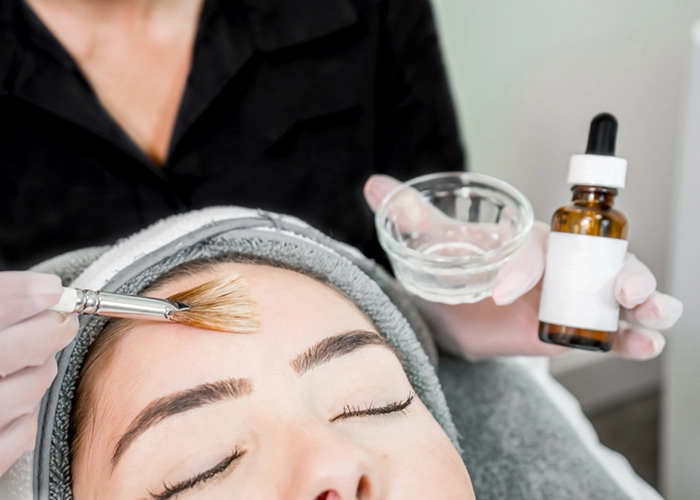
The selected peeling solution is applied using the prescribed technique. Tingling, warmth or mild stinging may occur.
Treatment Completion
Depending on the product, the solution may be neutralised, removed or managed according to its specific instructions.
Aftercare Guidance
The patient receives guidance on cleansing, moisturisation, sun protection and when to resume active skincare products.
“Before undergoing Radiance Blend Peel treatment, patients should be informed about the ingredients, expected skin response, possible downtime and total cost.”
Radiance Blend Peel vs Regular Facial: What Is the Difference?
A regular facial usually focuses on cleansing, moisturisation and cosmetic skin maintenance. Chemical peels use exfoliating agents that may produce a more pronounced effect on skin renewal.
| Comparison Aspect | Radiance-Focused Chemical Peel | Regular Facial |
|---|---|---|
| Protocol & Formulation | Uses a specified chemical exfoliation protocol with active exfoliating solutions | Usually involves cosmetic cleansing, superficial scrubs, and topical skincare creams |
| Target Concerns | May target selected texture and tone concerns, dullness, and superficial pigmentation | Often focuses on temporary skin comfort, relaxation, and immediate cosmetic appearance |
| Clinical Assessment | Requires assessment of peel strength, active ingredients, and individual skin suitability | Generally involves less intensive exfoliation without deep clinical evaluations |
| Downtime & Recovery | Recovery depends on the peeling formulation (mild dryness, flaking, or temporary redness) | Usually involves minimal downtime with immediate resumption of daily routines |
Radiance Blend Peel should only be categorised as a chemical peel once its ingredients and procedure are confirmed.
For a broader explanation of peel types and indications, explore Chemical Peel Treatment at Influennz Clinic.
Recovery and Aftercare After a Radiance Peel
Recovery after chemical peeling depends on the formulation and depth of treatment.
A superficial peel may cause temporary dryness, tightness, mild redness or flaking. Some peels produce little visible shedding, while stronger formulations may require longer recovery.
General Aftercare Instructions
- Using a gentle cleanser and suitable moisturiser
- Applying broad-spectrum sunscreen consistently
- Avoiding unnecessary sun exposure during healing
- Temporarily stopping harsh exfoliants or strong active products as advised
- Avoiding picking or rubbing peeling skin
- Following the dermatologist's procedure-specific instructions
How Soon Can You Expect Results?
Some superficial peeling treatments may produce a smoother appearance after the initial recovery period. Pigmentation and texture concerns can take longer to improve.
Results depend on the type of peel, skin condition, treatment depth and individual response. There is no verified standard number of sessions or fixed result timeline for Radiance Blend Peel. Your dermatologist can discuss realistic expectations once the treatment formulation and skin suitability have been established.
Possible Risks & Considerations
Possible risks include irritation, burns, prolonged redness, pigmentation changes, infection and, rarely, scarring. The exact downtime for Radiance Blend Peel should be confirmed from its formulation rather than assumed from other peel treatments.
- Skin Barrier Evaluation: Pre-procedure diagnostic to prevent reactive hyperpigmentation
- Calibrated Exposure: Controlled timing customized for Indian skin phototypes
- Dermatologist Guidance: Dedicated post-peel protocol to safeguard long-term results
Radiance Blend Peel Treatment Cost in South Delhi
The cost of Radiance Blend Peel treatment in Delhi should be confirmed with the clinic before booking.
The total price may depend on what the treatment includes, whether a separate consultation is required and whether additional sessions or skincare products are recommended.
Safety Over Price: A treatment's suitability and safety should always be considered alongside its price.
What to Ask When Comparing Peel Clinics
Patients comparing advanced peel clinics in Hauz Khas should ask about:
- The actual peel formulation and treatment method
- Price per session and included services
- Expected recovery and possible side effects
- Whether additional sessions may be needed
- Follow-up care and aftercare instructions
Radiance Blend Peel Consultation With Dr Geetika Srivastava
Dr Geetika Srivastava is an AIIMS-trained MD Dermatologist and Founder and Medical Director of Influennz Skin & Hair Clinic. She has over 10 years of clinical experience in dermatology and aesthetic skin care.
At Influennz Clinic in Hauz Khas, patients discuss specific concerns such as dullness, uneven texture, pigmentation, and barrier sensitivity before deciding whether a chemical peel is medically appropriate.
The consultation helps establish realistic treatment expectations and identifies underlying skin conditions that may require specialized medical skincare or an alternative procedure.
Radiance Peel Clinic in Hauz Khas, South Delhi
Influennz Skin & Hair Clinic is conveniently located in Hauz Khas Market, New Delhi, accessible to patients from Green Park, Safdarjung Enclave, Panchsheel Park, Malviya Nagar, Greater Kailash, and nearby South Delhi neighbourhoods.
For patients searching for a specialized Radiance Peel clinic near them in South Delhi, the clinic provides comprehensive diagnostic consultation and supervised care with a qualified dermatologist.
Frequently Asked Questions About Radiance Blend Peel in Delhi
Radiance Blend Peel is a named skin-peeling treatment. Its exact ingredients, treatment depth and expected benefits should be confirmed with the clinic. A dermatologist can assess whether it is suitable for your skin concerns.
You can contact Influennz Skin & Hair Clinic at D-65, Hauz Khas Market, South Delhi, to enquire about the treatment protocol, availability and consultation process.
Selected superficial chemical peels may improve dull-looking skin caused by surface roughness or uneven texture. Results depend on the formulation and skin type.
Suitability depends on the active ingredients and the cause of sensitivity. People with active irritation, eczema or a damaged skin barrier may need to delay or avoid peeling treatments.
Certain chemical peeling formulations can improve superficial pigmentation. Whether Radiance Blend Peel is appropriate depends on its ingredients and the type of pigmentation being treated.
The exact price should be confirmed with Influennz Clinic. Ask about the per-session cost, consultation charges and any recommended additional treatments.
There is no verified standard session count for this named peel. The number of treatments, if recommended, depends on the formulation, skin condition and desired outcome.
It may be a type of chemical peeling treatment, but its specific formulation must be confirmed. Chemical peels vary in ingredients, depth and clinical applications.
Treatment timing depends on the peel strength, expected recovery and previous skin reactions. Avoid trying an unfamiliar peel immediately before an important event.
Look for appropriate dermatological assessment, clear information about the peel formulation, realistic expectations, transparent pricing and proper aftercare guidance.
Book Your Consultation Today & Get Extra Discount!
Disclaimer: The information provided on this page is for educational and informational purposes only and does not substitute professional medical advice, diagnosis, or treatment. Radiance Blend Peel and chemical peeling protocols require individualized assessment by a qualified dermatologist. Results and recovery periods vary based on individual skin type and clinical conditions.